If you’ve ever wondered what the difference is between alpacas and llamas, it’s more than just some red pajamas.
Just ask the nearly three dozen BCHS students who last month spent a day at an alpaca farm in the Catskills, learning all about the animals that are often confused with their distant cousins. It turns out alpacas are smaller, softer, and offer a great source of sustainable wool.
The students, who are enrolled in Jessica Westervelt’s AP Spanish, Intermediate Spanish and Spanish Civilization and Culture classes at the high school, traveled to Buck Brook Farm for a fun-filled learning experience.
Westervelt said the trip was a first for these classes.
“We just finished a unit on Peruvian textiles, which included knitting and weaving using alpaca and llama wool,” said Ms. Westervelt. “The farm visit was an opportunity for the students to learn about the process involved in turning the wool into usable fibers to create sellable products.”
Students engaged with experts at the farm who led them through three learning stations during their visit.
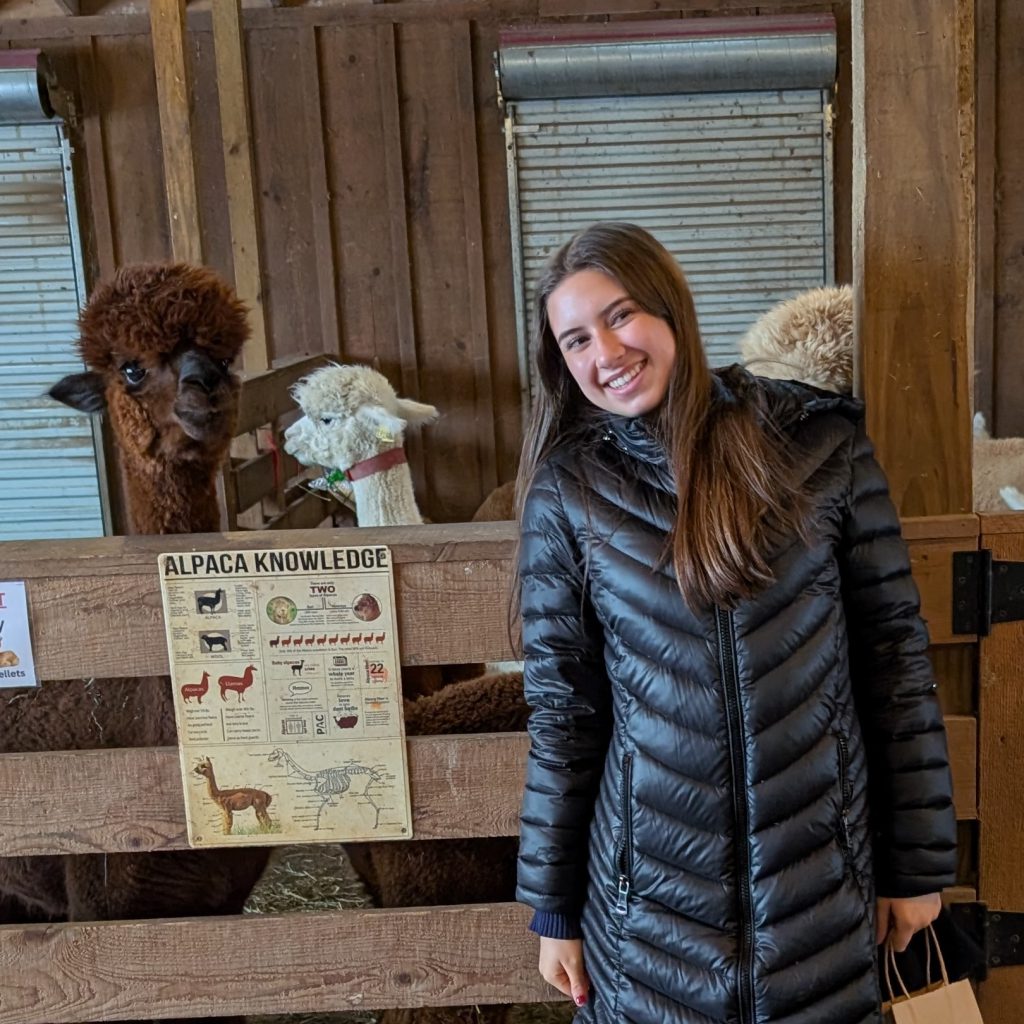
At the first station, they learned about different types of wool, including llama, alpaca, sheep, and rabbit fiber. Farm staff explained the hypoallergenic properties of alpaca wool and shared how alpacas help the farm meet its sustainability goals. Students also explored alpaca genetics, discovering that their lineage traces back to Peru, how alpacas are named, and how DNA testing can be used to produce crias (offspring) with specific coat colors.
The second station offered hands-on fun, as students fed, petted, and took photos with a variety of farm animals, including llamas, alpacas, goats, sheep, rabbits, and a friendly pot-bellied pig named Ruby.
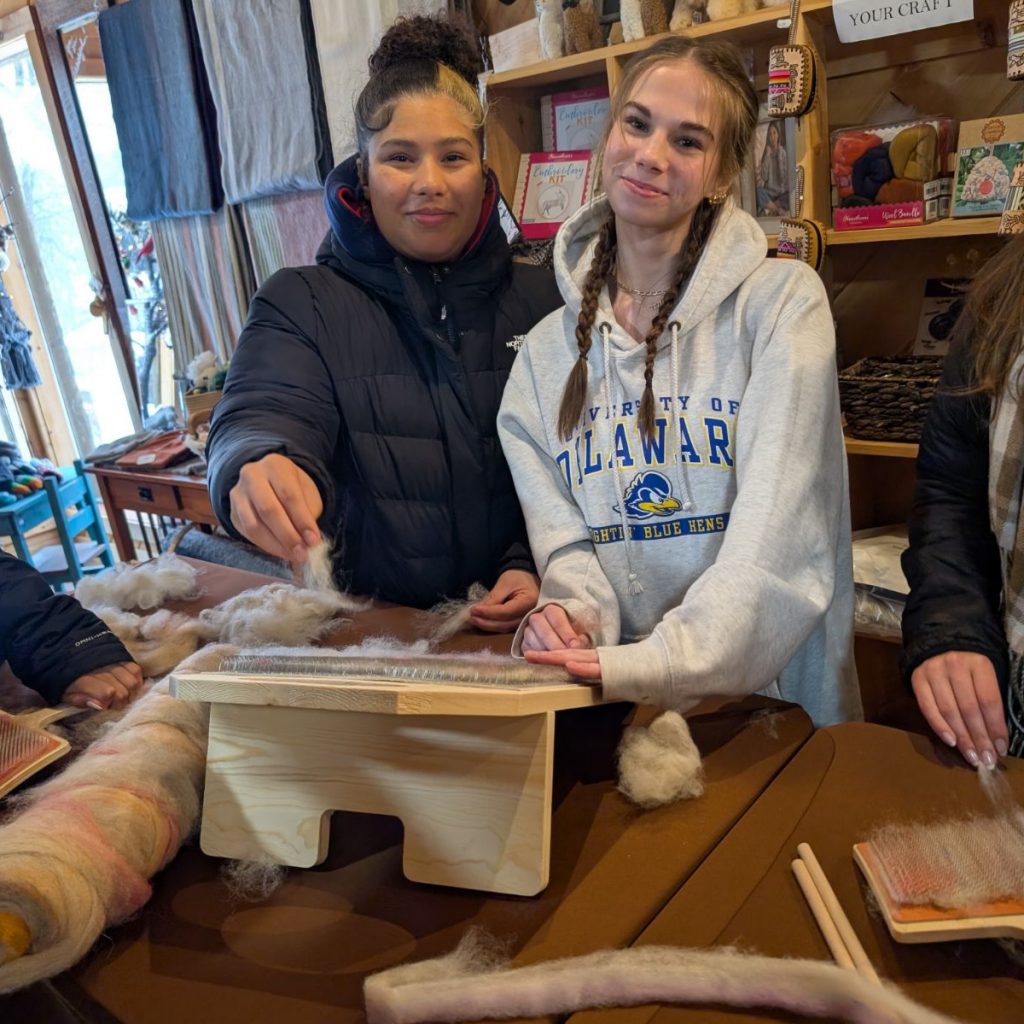
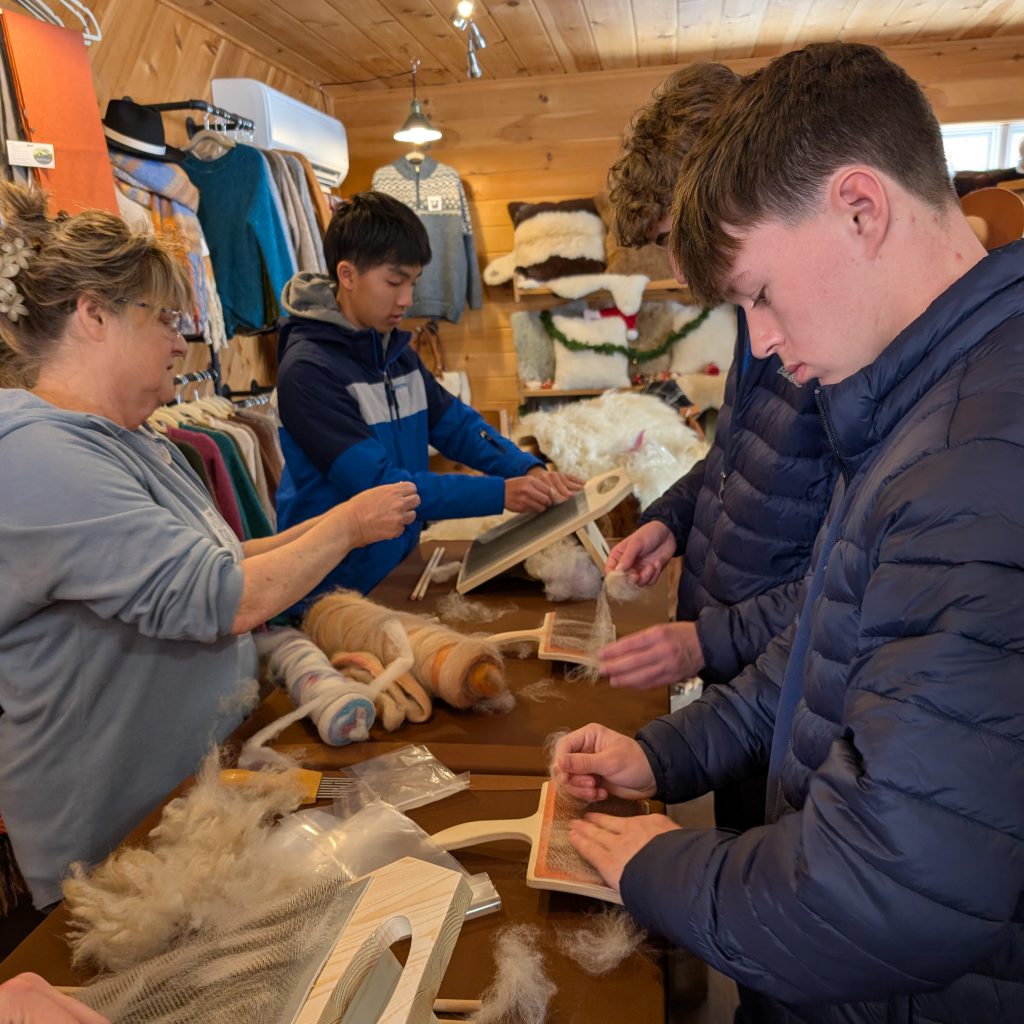
At the final station, students learned how wool is carded and shaped into a “rolag,” or a soft tube of fiber used by spinners to begin making yarn. Each student carded wool, added color, and took home a keepsake rolag from the trip.
It was a memorable winter learning experience for our students!